An audio guide in a museum is a convenient way to explore an exhibition through audio using your own smartphone or special equipment. It is not intended to replace live communication with a guide, and there is no need for that. Instead, an audio guide serves a different purpose: it is a thoughtful, unbiased voice of the exhibition that helps visitors understand the story of a show, a museum, or a particular object. Audio guide texts are created by museum professionals and go through several stages of editing and approval before recording, which minimizes the risk of inaccuracies and errors.
An audio guide allows visitors to explore a museum space independently and at their own pace, choosing exactly those topics and objects that spark their interest. It engages two key senses — hearing and sight: by listening to the narration while simultaneously viewing the exhibits, visitors better grasp their context, and the story comes alive in the imagination, turning a museum visit into a coherent and deeply immersive experience.
Audio Guides as Part of the Contemporary Museum
Audio guides are increasingly becoming a natural and integral addition to museum practice. They help reduce the workload of guides while giving visitors the freedom to choose their own format of engagement with an exhibition. By putting on headphones, a person enters a personal narrative of interaction with the museum: following a suggested route, skipping certain topics, changing the order of listening, or hearing the story from beginning to end.
Whereas implementing audio guides once required expensive and complex equipment, today it is enough to place QR codes — visitors can then access content directly from their smartphones. This approach makes museums more open, user-friendly, and technologically up to date.
The Voice of the Audio Guide
Thanks to audio guides, museums become more visible in the digital space, accessible to wider audiences, and easier to understand—without losing their identity, voice, or curatorial vision.
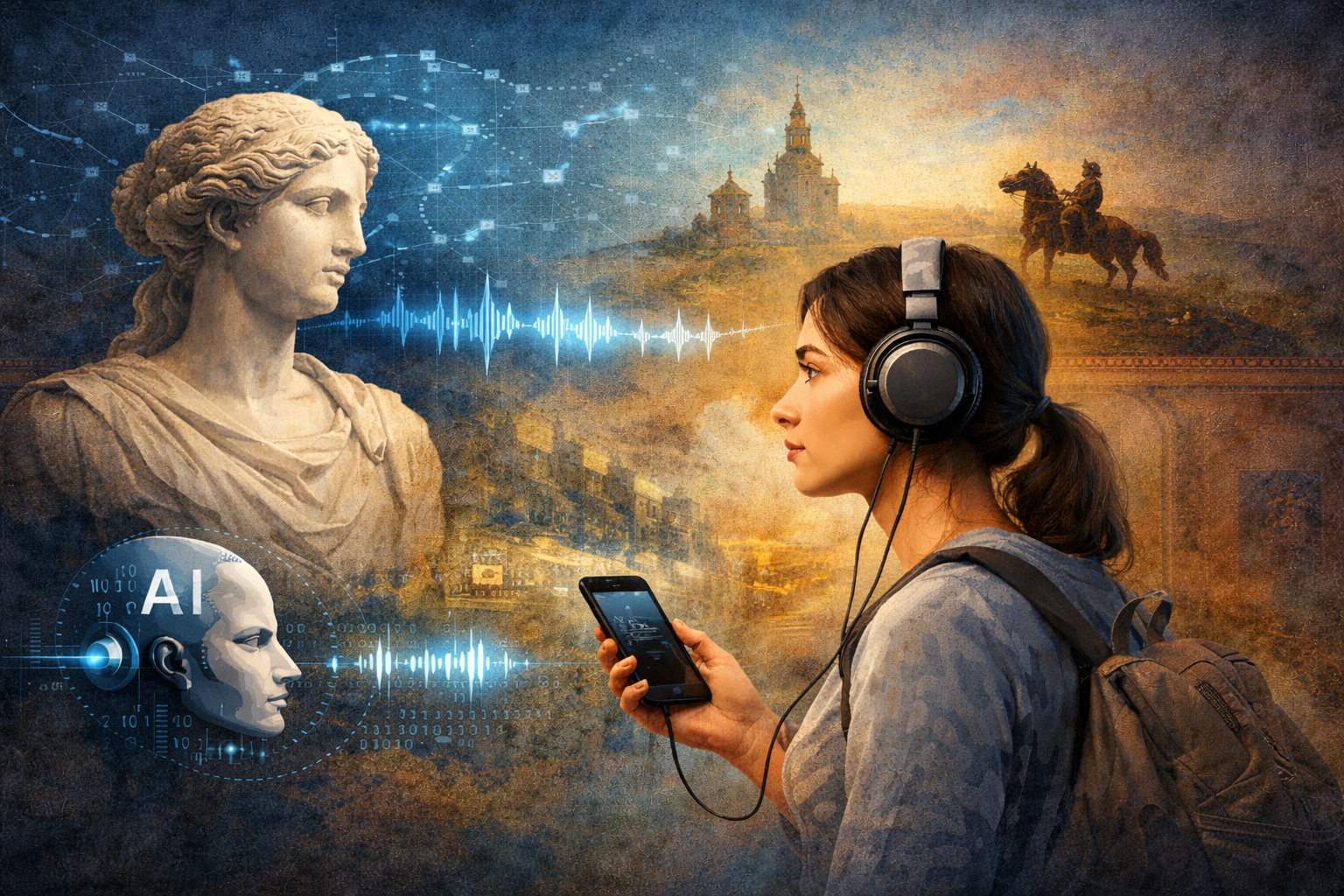
This voice can sound in different languages, timbres, and intonations, adapting to audiences and contexts. With the development of technology, these voices are increasingly created using artificial intelligence, which significantly speeds up production and reduces the cost of implementing audio guides in museums. As a result, voice narration becomes available not only for permanent exhibitions but also for temporary ones.
Audio guides can be listened to as standalone stories — before visiting a museum or even without being physically present in the space. For example, the emuseum.online platform already offers a wide selection of audio guides, from small regional museums to leading national institutions. This opens up the opportunity to explore cultural heritage in a convenient format—anytime and anywhere.
In a world where human attention is spread across many formats, the audio guide helps museums preserve their voice and be heard. It takes the museum beyond its walls — into a smartphone, into headphones, into everyday life—while preserving what matters most: depth of meaning, respect for history, and a strong curatorial vision. That is why audio guides today are becoming an important tool for the sustainable development of museums and for contemporary cultural communication.






 (1)_latest.webp)