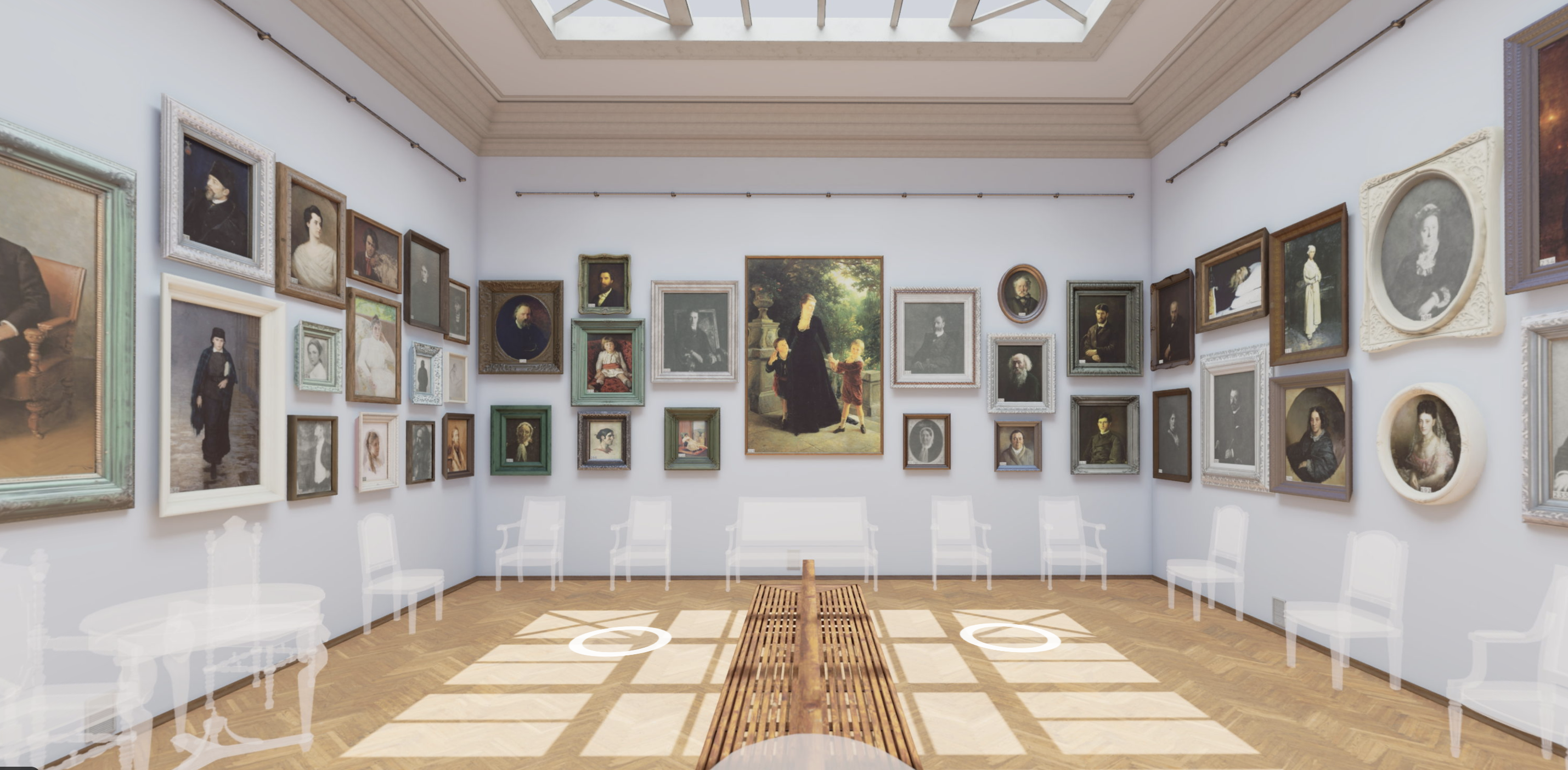
Over the past four years, the Ukrainian House has become one of the key spaces for reflecting on contemporary Ukrainian reality—through art, memory, tradition, and personal experience. Its exhibitions did more than simply present displays; they created environments for dialogue with the audience, responded to the challenges of the time, to war, to the search for identity, and to the need for light and hope.
It was here that grand national narratives intertwined with intimate personal experiences, while the classical museum format was reimagined through the language of contemporary media and curatorial approaches.
In this selection, we have gathered five of the most striking exhibitions of the Ukrainian House from the past four years—projects that became major cultural events and left a visible mark on the public sphere. These exhibitions have become markers of their time—ones worth remembering, rethinking, and seeing again.
How are you?
 Source: Ukrainian House
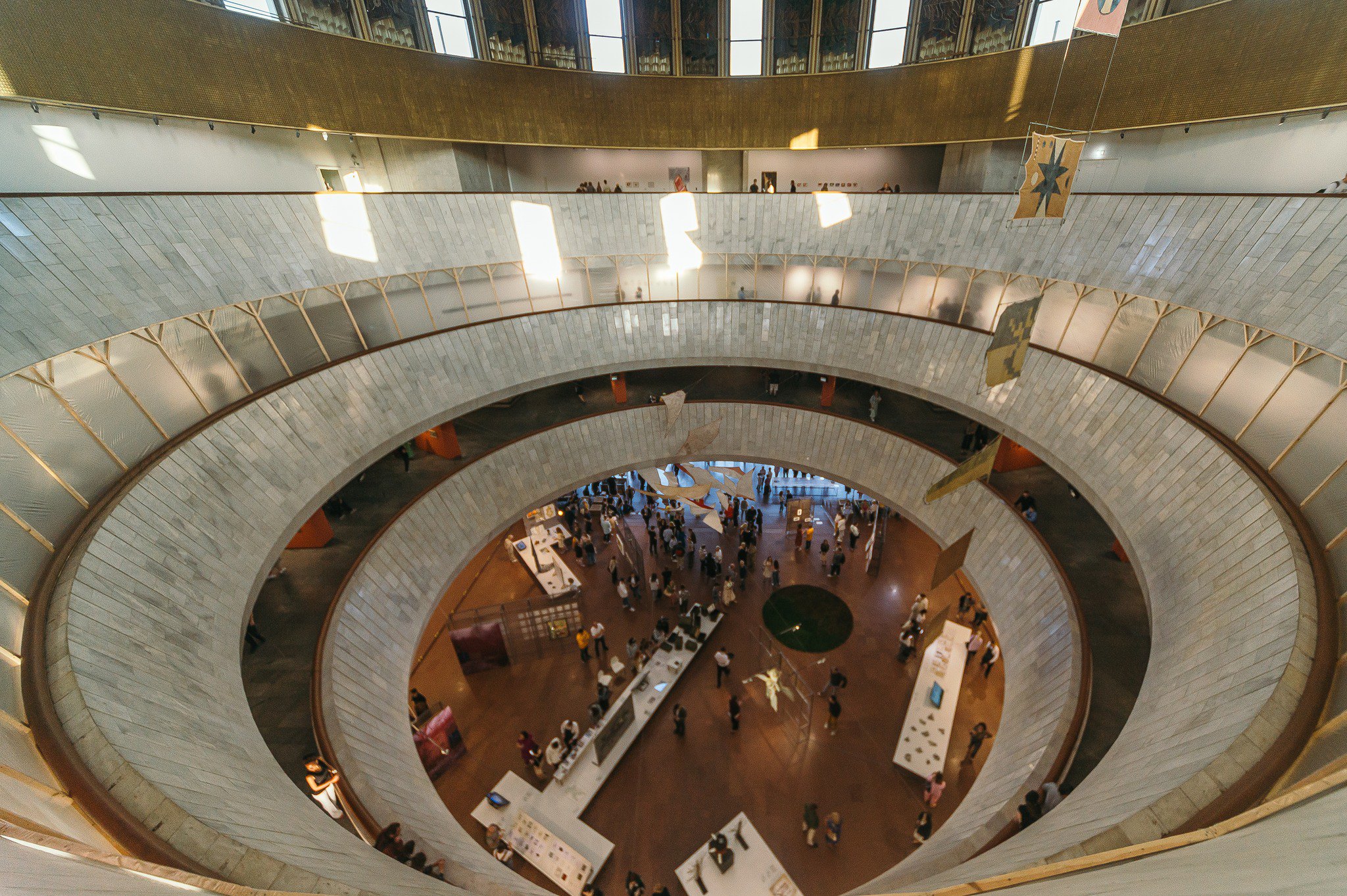
In 2023, the exhibition “How Are You?” took place at the National Center Ukrainian House—a large-scale project that marked the first public step of the newly established Ukrainian Museum of Contemporary Art (UMCA). The exhibition brought together more than 500 works by over 100 Ukrainian artists created after February 24, 2022, and occupied all five floors of the building. Eight curators shaped the exhibition as a chronological journey through the experience of war—from the first days of the full-scale invasion to the spring of 2023—where each floor corresponded to a distinct period, emotional state, and mode of artistic response.
“How Are You?” emerged not as a classical museum narrative, but as a space of situation, testimony, and shared experience, where Time was declared the chief curator. The exhibition combined the voices of established artists and new names, neurodivergent artists and those who entered art during the war, dismantling hierarchies and creating a polyphony of experiences. The project did not end with the closing of the physical exhibition; it continued in a digital format. Thus, even several years after its completion, “How Are You?” can be viewed online on the emuseum.online platform.
Home for Christmas. The light of Ukrainian tradition
 Source: Ministry of Culture
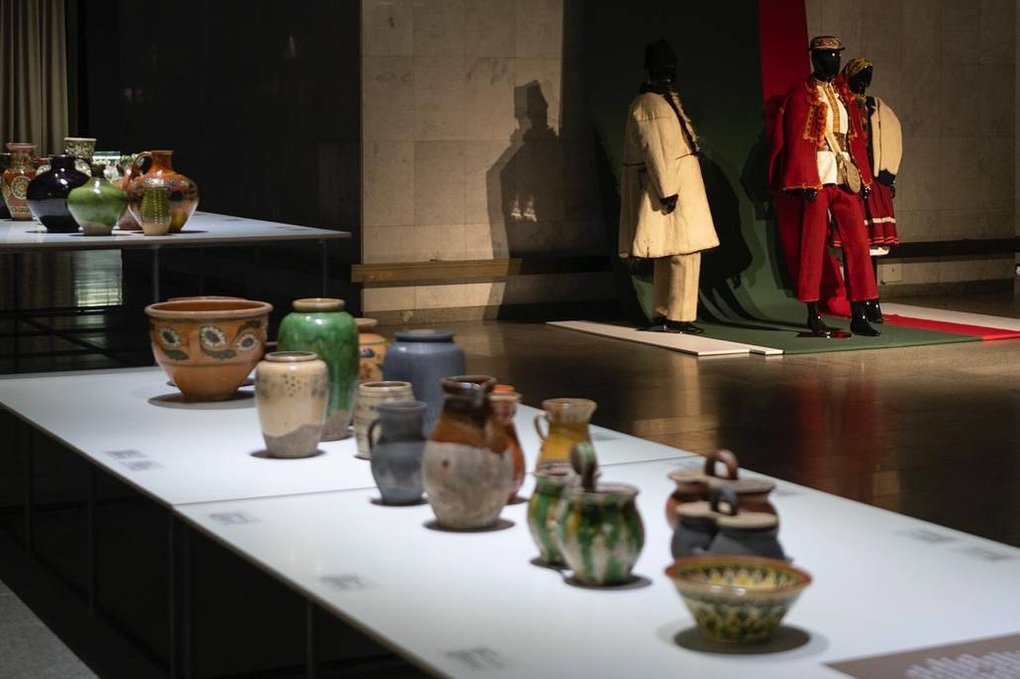
From December 15, 2023 to January 21, 2024, the exhibition “Home for Christmas. The Light of Ukrainian Tradition” took place at the National Center Ukrainian House. The project reflected on Ukrainian Christmas as a profound cultural anchor and a shared symbolic space in a time of radical change and war. The exhibition spoke of tradition as a force preserved through centuries of trials—one that today helps sustain a sense of unity, home, and warmth regardless of circumstances. Christmas Eve was presented not merely as a ritual, but as a state of togetherness that unites Ukrainians both within the country and abroad.
The exhibition combined historical artifacts with contemporary interpretations: traditional clothing and tableware, carpets, decorations, audio recordings of carols, as well as works by classical and contemporary artists and designers who reimagined the Christmas heritage in new ways. It was complemented by a rich educational program—concerts, lectures, and workshops for children and adults—along with a festive shop featuring works by Ukrainian artisans. The project became an important cultural event of the winter of 2023–2024, emphasizing the continuity of Ukrainian tradition and its living presence within the contemporary artistic context.
Szilvashi Circles
 Source: photo of Ruslan Synhaevskyi
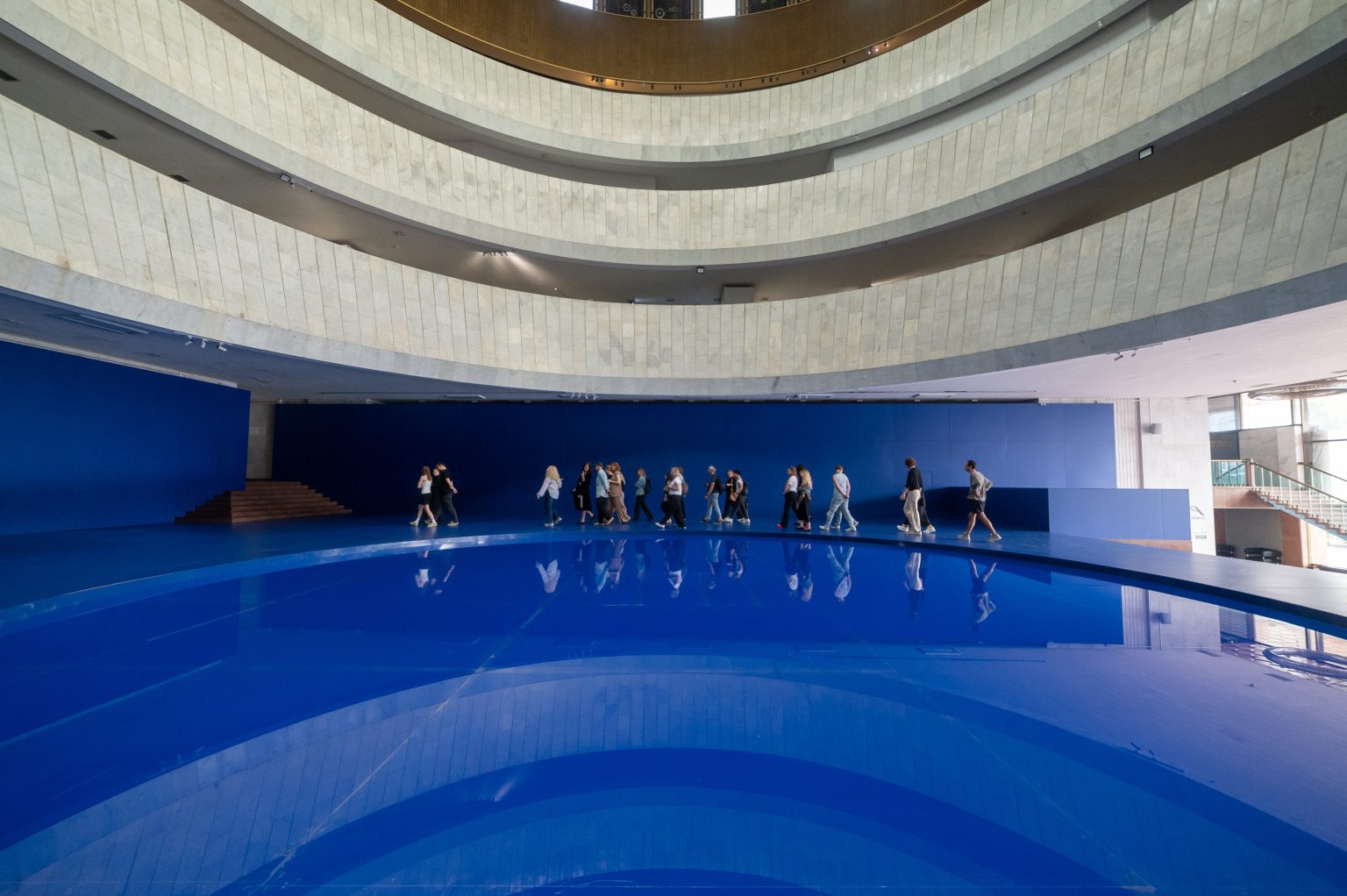
The exhibition “Szilvashi Circles,” held from September 13 to October 27 at the Ukrainian House in collaboration with the Ukrainian Museum of Contemporary Art, became the first major museum retrospective of Tiberii Szilvashi—one of the key figures in Ukrainian art of the second half of the 20th and early 21st centuries. The project presented the artist’s work in its development: through painting, texts, unrealized and transformed projects, as well as in a broad dialogue with the context of its time. Across the five floors of the Ukrainian House, Szilvashi’s works were shown alongside pieces by more than 90 artists, underscoring his role as a central figure around whom artistic communities of several generations were formed.
The retrospective revealed Szilvashi not only as a painter, but also as a thinker and curator for whom art is a tool for seeking harmony and articulating truth. Importantly, to preserve the project and expand its accessibility, a 3D tour of the exhibition was created—so today “Szilvashi Circles” can be viewed online, regardless of location. The digital format makes it possible to retrace the curatorial route, observe the interaction of works within the space, and experience the scale and multilayered nature of an event that became one of the key artistic highlights of the season.
ProZori
 Source: antikvar.ua
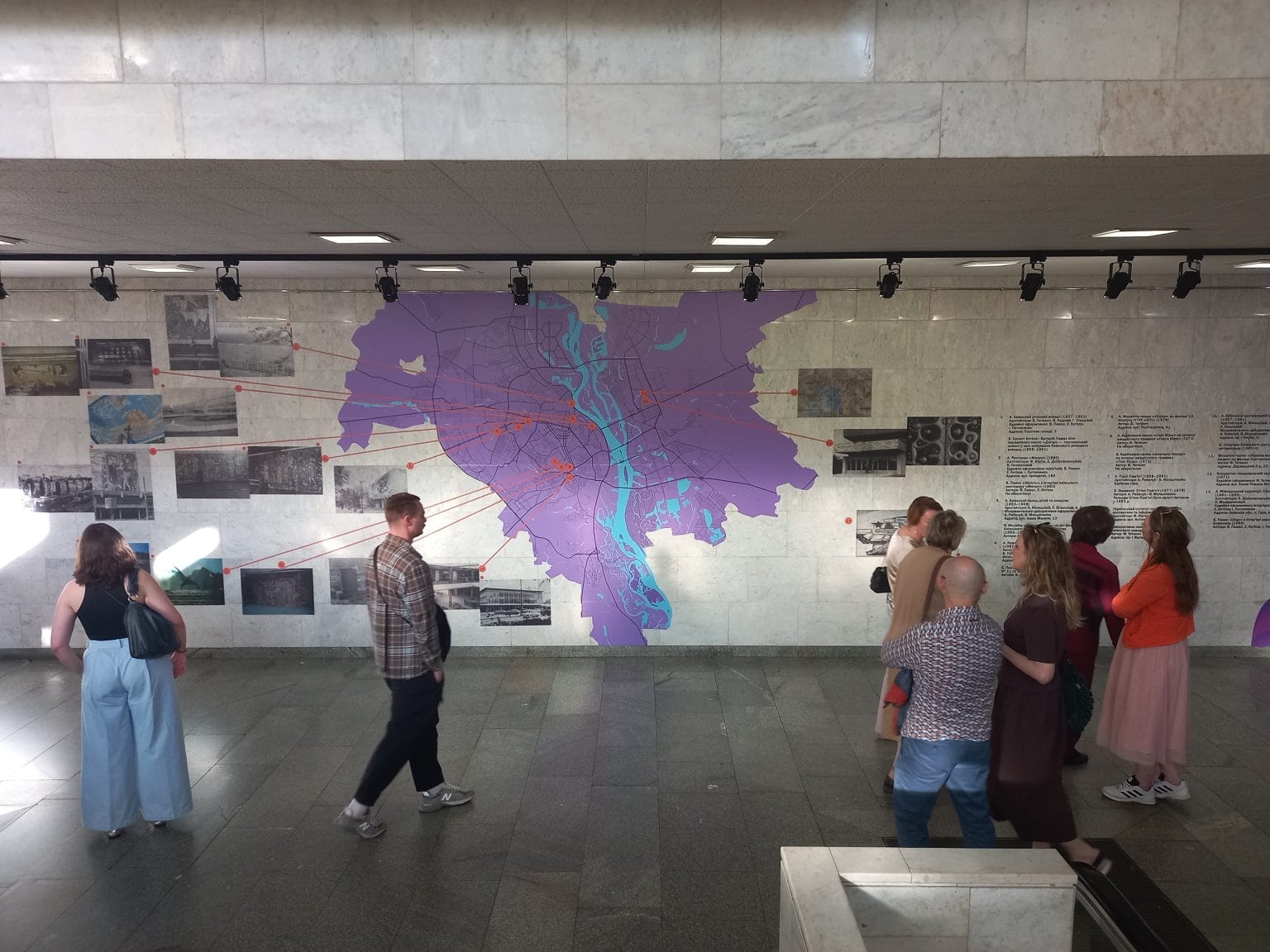
The exhibition “ProZori,” held in June 2025 at the Ukrainian House in collaboration with the Dukat Art Foundation, was a large-scale project dedicated to Kyiv-based visionary artists of the second half of the 20th century—Fedir Tetyanych, Valerii Lamakha, Ada Rybachuk and Volodymyr Melnichenko (ARVM), and Florian Yuriev. The exhibition focused on their contribution to shaping the image of postwar Kyiv—from iconic monumental works and mosaics to architectural symbols such as the “Flying Saucer”—while also revealing the artists’ profound philosophical pursuits, their interest in space, memory, the synthesis of art and science, and creative freedom beyond ideological control.
The project presented more than 200 works—paintings, graphics, sculpture, archival materials, photographs, and personal testimonies—many of which were shown publicly for the first time, including materials from Valerii Lamakha’s Book of Schemes and ARVM’s Hiroshima cycle. Multimedia elements played a key role in the exhibition, with mapping, animation, and sound installations creating an immersive experience. The exhibition was digitized and is now available to view online as a 3D tour on the emuseum.online platform, preserving access to the artists’ legacy and continuing the dialogue on the relevance of their ideas in today’s context.
And I saw
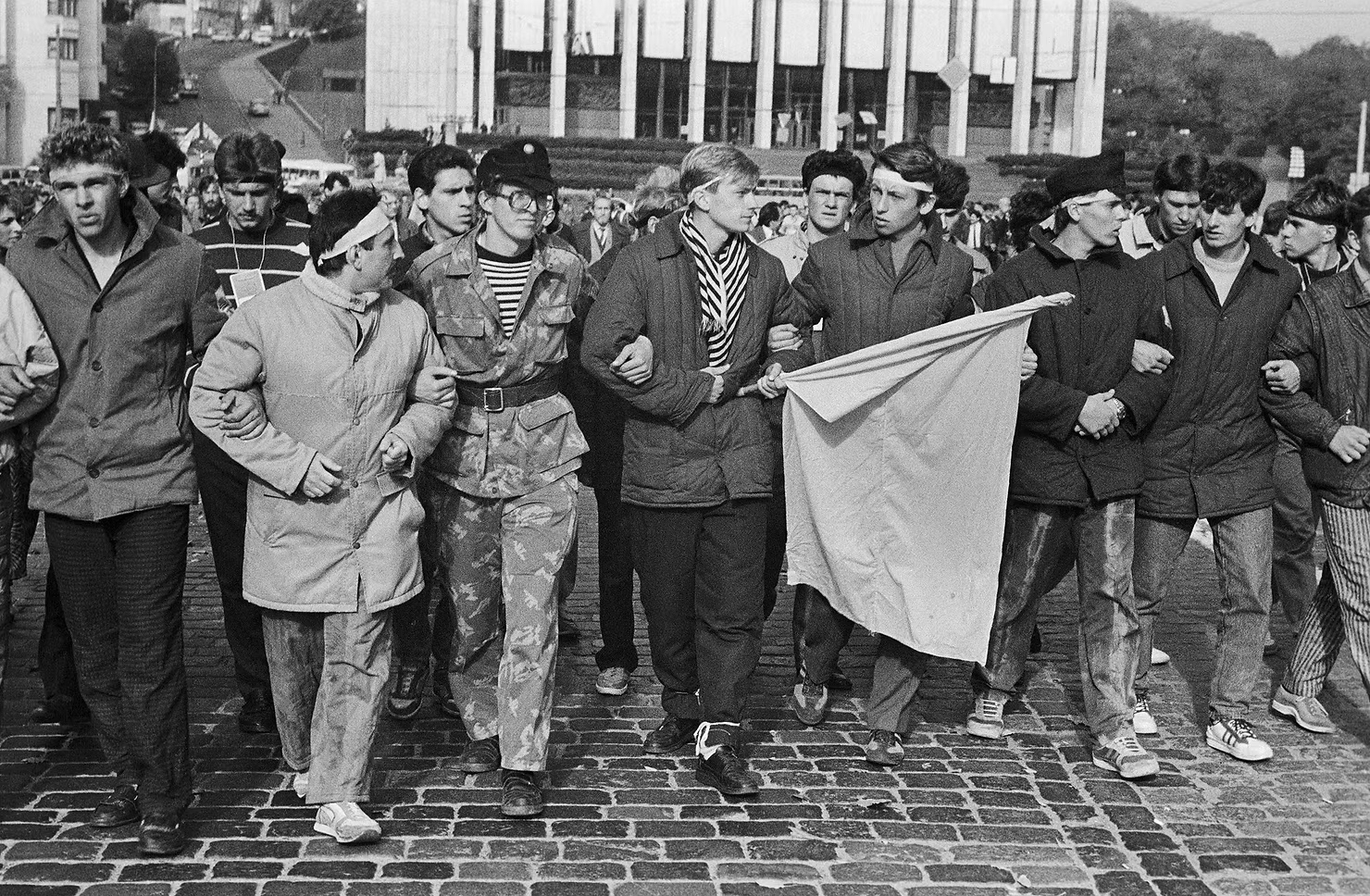
Revolution on Granite, Kyiv, October 1990. Photo: Oleksandr Hliadelov
The exhibition “And I Saw,” held from September to October 2025, became a large-scale photographic project by Oleksandr Hliadelov, guiding viewers through the history of independent Ukraine. The exhibition brought together 323 black-and-white photographs created over more than 35 years, capturing key turning points of recent history: the collapse of the USSR and the achievement of independence, the crisis of the 1990s, the Orange Revolution, the Revolution of Dignity, the Russian-Ukrainian war and its full-scale phase. A special place was given to the renowned series “Children of the Streets,” which lays bare social vulnerability and human dignity in the most difficult circumstances.
The exhibition was conceived as a polyphonic space of memory: thematic sections were accompanied by essays written specifically for the project by philosophers, historians, military personnel, writers, and civic figures, adding depth and personal reflection on time. The title “And I Saw” refers to the Revelation of John the Theologian—a vision of the end of the old world and the birth of a new one. In Hliadelov’s photographs, these processes coexist, capturing despair and hope, loss and resilience at once. Free of judgment or moralizing, his works emerge as an honest documentary testimony of an era and, at the same time, an intimate conversation about human experience in the midst of history.
The exhibitions gathered in this selection—diverse in form and theme—are united by their ability to remain relevant even after they close: in the memories of viewers, in digital formats, and in ongoing conversations and reinterpretations. They not only reflect their era, but also help shape the cultural landscape of the future—one to which we want to return again.
 (1)_latest.webp)


_latest.webp)